
I come to praise the photographer, not to bury her
It has been brought to my attention that not everyone is on the same page as I am with regard to Annie Leibovitz, whom I believe to be one of the greatest photographers of all time.
Annie has been catching a lot of shit this week for her photos of Jeff Bezos and fiancé Lauren Sanchez in Vogue magazine. We hoi polloi have a visceral reaction to seeing weird billionaires passed off as working folk for obvious (and reasonable) reasons, but some have seized the opportunity to take swipes at the photographer, too, which I think is largely undeserved.
Sure, this picture is worthy of criticism on many fronts, not the least of which is its personification of capitalist yuck. At a time when many—this cowboy’s employees included—are struggling to make ends meet, the world’s tone deafest man is playing dress up as a working class hero. It is both literally and figuratively gross.1 There’s some weird posing, and some other issues, but pretty much all of it goes back to the who of the picture, not the what.
Viewed purely as a photograph, the image is undeserving of hate. Not her best work, perhaps, but with a different subject and a different context, Annie would not be catching strays.
Okay fine, the millionaire photographer who was well compensated to make this image deserves some flak too. She could have styled them differently, she could have made different creative choices, she could have declined altogether. In practice, though, I think the world’s most famous celebrity photographer is unlikely to pass on an opportunity to photograph one of the world’s most famous people. In other words, don’t hate the player, hate the game.
It’s not just this week, though, and it’s not just this picture. Annie gets thrown under the bus in large and small ways all the time. No less a photographer than Magnum icon Elliott Erwitt once dismissed her as “a good commercial photographer.” I’ve personally had conversations with serious portrait photographers who have never even considered her work, assuming it not worth their time. And I’ve seen long, drawn out discussions in photography forums about whether this household name and living icon produces work that is any good or not. The premise is laughable, and it would be funny if it weren’t so sad. The perpetual debate stems, presumably, from the fact that she is so famous and successful. And possibly probably also because she is a woman.
It’s not that Leibovitz or any artist is above reproach. I have no issue with those who find actual fault in her work, so long as the critique is deeper than “popular = bad.”2 While the criticism “I don’t like her style” is perfectly valid, that sentiment is no more valid than those who do like her style.
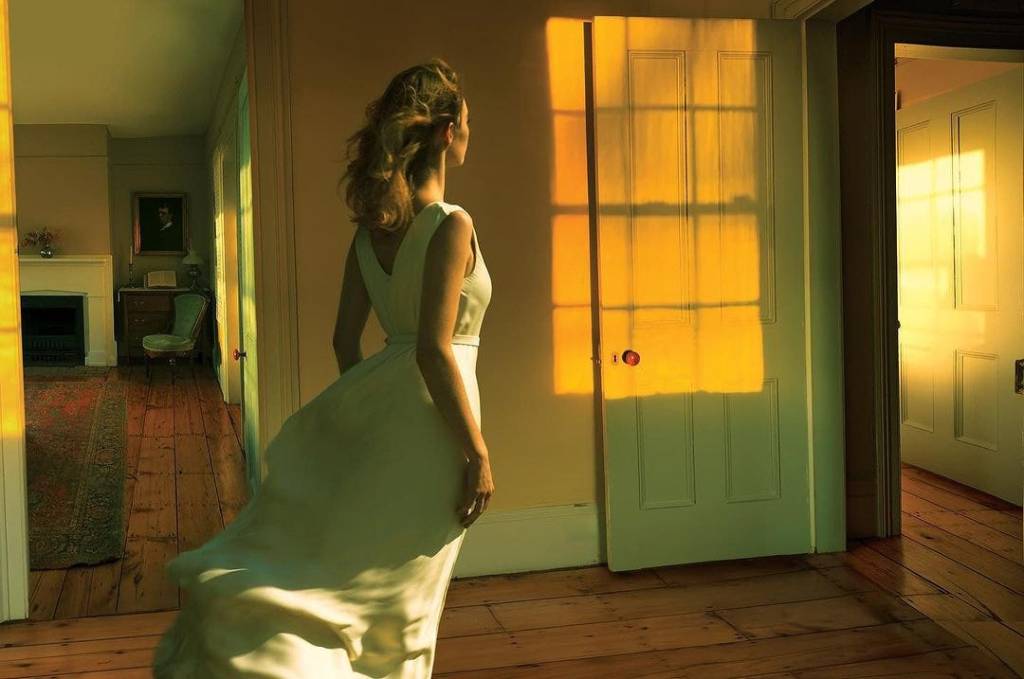
Okay fine, the millionaire photographer who was well compensated to make this image deserves some flak too. She could have styled them differently, she could have made different creative choices, she could have declined altogether. In practice, though, I think the world’s most famous celebrity photographer is unlikely to pass on an opportunity to photograph one of the world’s most famous people. In other words, don’t hate the player, hate the game.
It’s not just this week, though, and it’s not just this picture. Annie gets thrown under the bus in large and small ways all the time. No less a photographer than Magnum icon Elliott Erwitt once dismissed her as “a good commercial photographer.” I’ve personally had conversations with serious portrait photographers who have never even considered her work, assuming it not worth their time. And I’ve seen long, drawn out discussions in photography forums about whether this household name and living icon produces work that is any good or not. The premise is laughable, and it would be funny if it weren’t so sad. The perpetual debate stems, presumably, from the fact that she is so famous and successful. And possibly probably also because she is a woman.
It’s not that Leibovitz or any artist is above reproach. I have no issue with those who find actual fault in her work, so long as the critique is deeper than “popular = bad.”2 While the criticism “I don’t like her style” is perfectly valid, that sentiment is no more valid than those who do like her style.
 Bill Sawalich • Photographer + Writer